Choosing Calmness: How to Calm Your Thoughts Before They Control You
What can parents do when anxious or stressful thoughts take over and make calm parenting feel impossible?
By Nicholeen Peck
When Stress Takes Over the Brain
Cortisol is real — and powerful. When stress floods the brain with cortisol, it’s almost impossible to think clearly. Logic fades, emotions heighten, and even small worries can spiral into thought loops that feel too big to handle. Everyone has moments when their mind seems to take the wheel and race toward worst-case scenarios.
This isn’t weakness. It’s chemistry. But chemistry doesn’t have to control us. The truth is that even when cortisol is high and calm feels far away, we can still choose to change our thoughts — and in doing so, change everything about how we feel and respond.
A Mother’s Sleepless Nights
Recently my daughter had her first baby — such a sweet, tiny soul. Those early days are full of joy, but also exhaustion. After coming home from the hospital, my daughter called me in tears. She was getting almost no sleep. The baby couldn’t seem to calm down long enough to rest, and neither could she.
Her mind was caught in a stressful thought pattern: I’m not getting enough sleep. I can’t function. What if I can’t do this? These thoughts, though understandable, created more cortisol, more anxiety, and even less rest. Maybe you’ve been there too — I know I have. Sleepless nights and new responsibilities can quickly unravel our sense of emotional stability.
When I arrived at her home to help for a few days, I could almost feel the tension in the air. Her mind was racing, her shoulders tight, her eyes heavy with worry. I reassured her that she wasn’t alone — that I would take a shift so she could sleep. Just knowing that I was there allowed her body and brain to start relaxing.
After she’d had some rest, we sat together and talked about what thoughts were causing her concern. We discovered that she felt stuck in the cycle of fear — worrying about not sleeping enough to not sleep at all. It reminded me of time when I felt the same after a couple of my babies. Especially that first one. There are so many unknowns to new parenthood.
The Thought-Shift Process
Together, we walked through a simple process that anyone can use when stress takes over:
- Notice the thought that’s driving your emotions.
Calmness always begins with awareness. My daughter recognized that her constant worry — What if I never sleep again? — was keeping her body in fight-or-flight mode. - Challenge the thought.
I asked, “Is that thought completely true?” She smiled, realizing it wasn’t. She would sleep again. This was just a short moment, not forever. - Replace the thought with truth.
We practiced saying calming truths she could rely on:- “I will get sleep. This is just a short season.”
- “She’s learning how to rest, and I can patiently teach her.”
- “Deep breathing tells my brain I’m okay — and tells the baby I’m okay too.”
- Act on the new truth.
She took deep breaths, spoke gently to her baby, and allowed her tone to carry peace. Within a day, both mama and baby were sleeping better.
This small story teaches big principles. Her calmness helped the baby calm down, which helped her rest, which helped her think more clearly — breaking the stress cycle. Calmness, it turns out, is contagious.
Why Truth Creates Calm
Many of the thoughts that steal our peace are simply not true. They’re emotional guesses that feel true because our bodies are flooded with stress chemicals. When we don’t challenge them, they become mental habits that shape our reactions and even our relationships.
Choosing calmness means choosing truth over fear. It’s not pretending everything is fine; it’s deciding to align our thoughts with reality and possibility instead of panic. Truth grounds us. It tells the brain, You are safe. You are capable. You can handle this.
When we take a deep breath and replace fearful thoughts with true ones, our brain chemistry begins to shift. Cortisol levels drop. The prefrontal cortex — the logical, decision-making part of the brain — re-engages. Calmness becomes not just an emotional state but a mental superpower.
Faith and the Power of the Mind
Scripture reminds us that the thoughts we dwell on shape who we become:
“For as he thinketh in his heart, so is he.” — Proverbs 23:7
Our thoughts write the story of our days. When we choose calm, truthful thoughts — thoughts grounded in faith, gratitude, and self-government — we build strength from the inside out. The more often we choose these thoughts, the easier it becomes to stay calm even when life feels uncertain.
Calmness is a choice, but it’s also a practice. It takes daily intention to notice lies and replace them with truths. It takes humility to see when we’ve slipped into reactive thinking. And it takes faith to believe that peace is always within reach, even when the world feels chaotic.
Learning Calmness Together
That night with my daughter reminded me how powerful it is when we support each other in choosing calmness. Just as my presence helped her rest, your calm presence can help others around you — your children, spouse, friends, or coworkers — find peace too. Calmness spreads through tone, body language, and even the chemicals our brains release.
When we learn to govern our thoughts, we change not only our personal peace but also the emotional climate of our homes. Children especially learn calmness by watching it modeled. When we tell ourselves the truth and act with self-government, they see that truth in action and begin to mirror it.
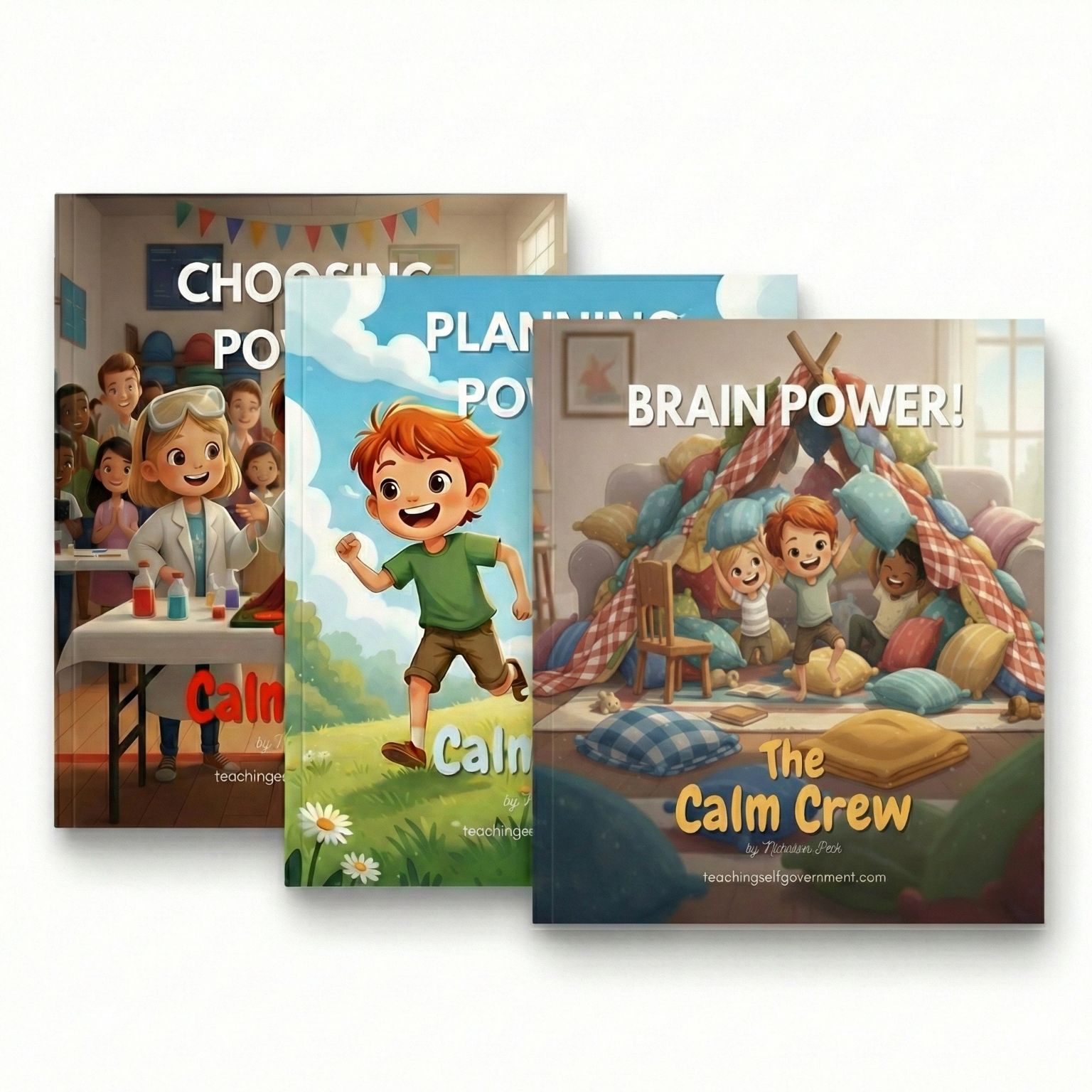
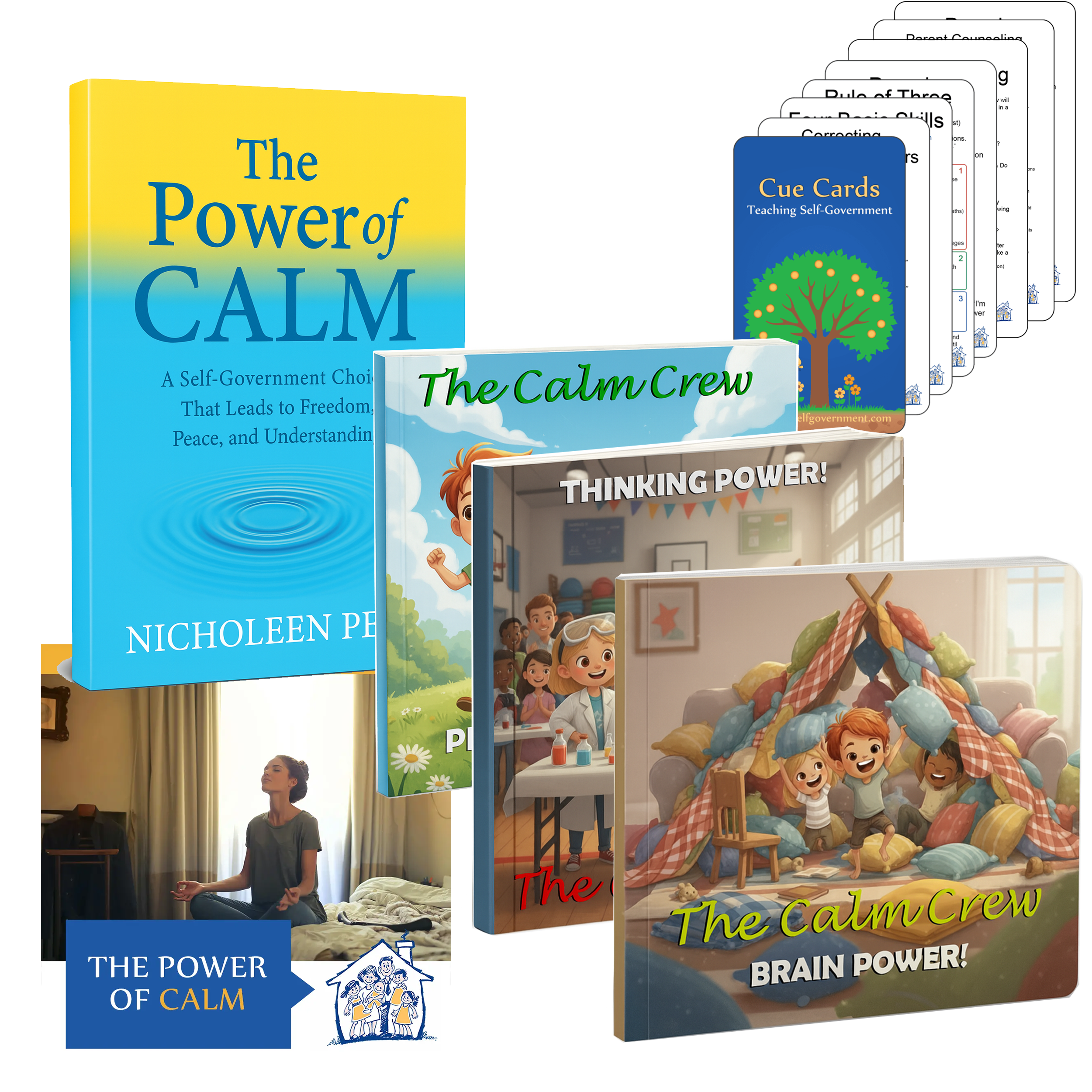
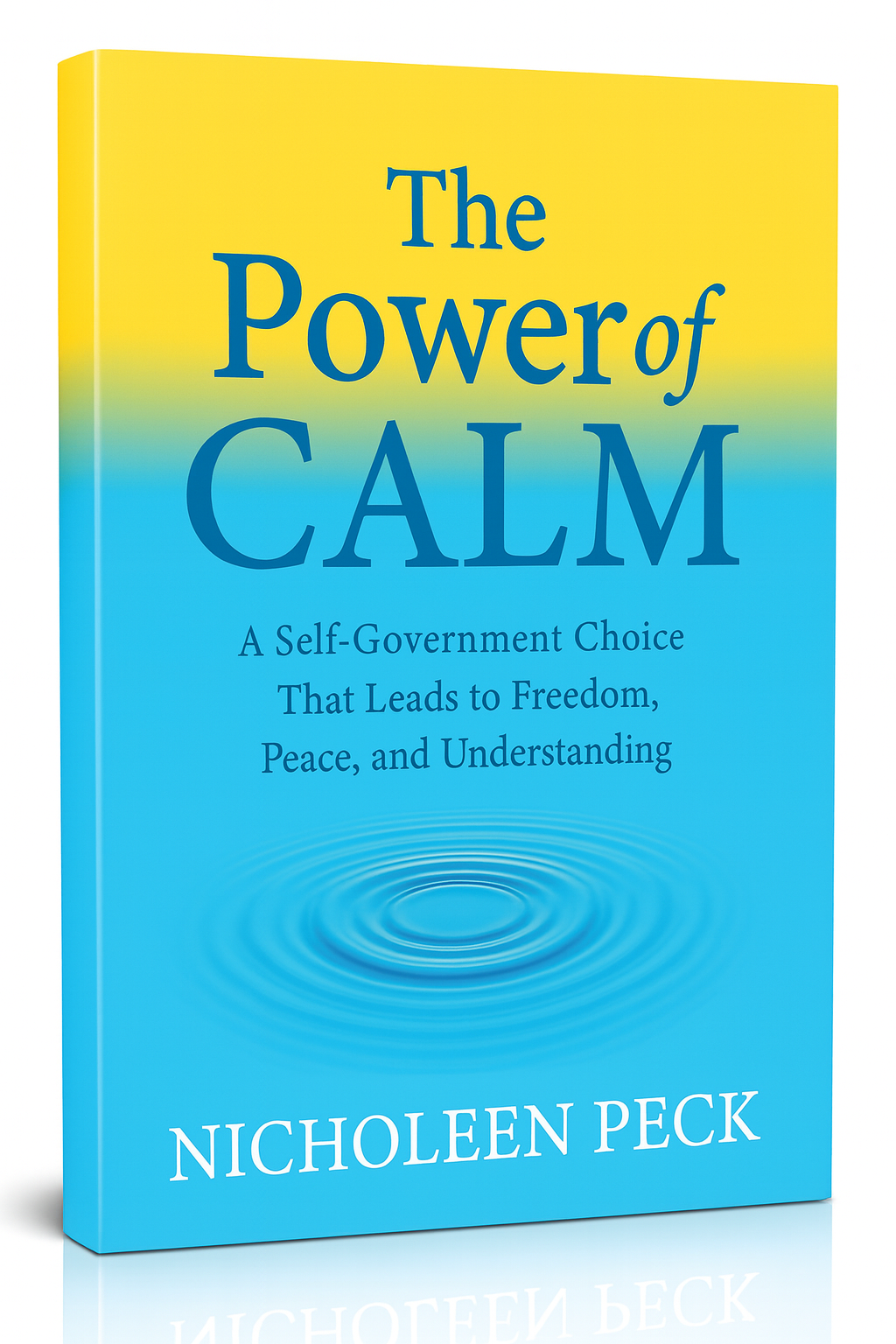
If you’re ready to deepen this journey for yourself and your family, I invite you to explore the upcoming resources that teach this process, and more, step-by-step. My new book, The Power of Calm, will help you understand and master the skill of calmness in your own life. And for children, the Calm Crew picture book set will teach these same principles through story, rhyme, and relatable examples.
Both will be shipping out at the end of this year, and you can preorder them now at TeachingSelfGovernment.com/store.
Choosing calmness starts with changing your mind — one truthful thought at a time.
Index
- Adult Children, Adults, Analyzing, Anger/Rage, Anxiety, Balance, Bedtime, Calm, Changing Hearts, Character Building, Common Vision Creation, Correcting, Culture, Describe, Dropping the subject, Emotions, Encouragement, Expectations, Gentle Parenting, No Answers, Power of Calm, Pre-Teach, Priorities, Problem Solving, Relationships, Seek to Understand, Selfishness, Teens (Youth), Toddlers & Younger Children, Tone, Tweens, Vision, Work Ethic